Stories · Spotle Movies #215
Why John Malkovich?
The question on everyone’s mind when Spike Jonze and Charlie Kaufman pitched Being John Malkovich.

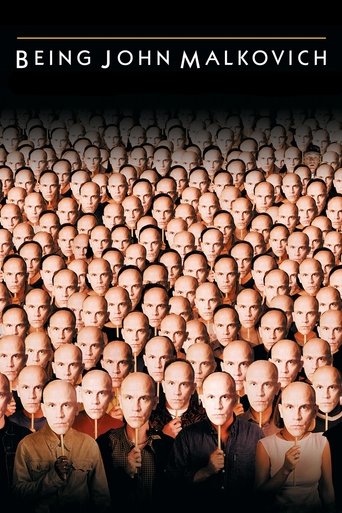
In 1996, an unusual script landed on Francis Ford Coppola’s desk. Titled Being John Malkovich, the script was penned by Charlie Kaufman, at the time a relatively unknown staff writer on sitcoms and sketch comedy series including Get a Life and The Dana Carvey Show.
The script was wondrous and weird and unlike anything else. Coppola loved it so much that he decided to pass it along to his son-in-law at the time, Spike Jonze, who agreed to direct the film in 1997. Jonze quickly onboarded two production companies and began shopping the script to studios around town.
Now, imagine you’re in charge of a movie studio, and that you live in a world where Being John Malkovich hasn’t been made yet. Spike Jonze shows up to your office to pitch you a new script. You hold all the power. Do you greenlight the film, because you are ahead of your time and you know a hit when you see it? Or, do you shoot it down because modern audiences don’t seem to care for this sort of quirky, surrealist comedy?
Or, do you press on the most nagging, obvious question at that very moment? Why John Malkovich? Don’t you want a bigger name associated with the film, Spike? Wouldn’t that help ensure the film’s financial success at the box office? And isn’t it more compelling to live 15 minutes as Hollywood’s most handsome leading man rather than some eccentric character actor like John Malkovich? Who the hell wants to be John Malkovich?
The answer is obvious, in retrospect. John Malkovich is the perfect choice, the only choice. The very premise itself relies on the central famed figure seeming like an inscrutable selection. Malkovich was one of few at the time, somehow both instantly recognizable and deceptively obscure.
At the Toronto Film Festival in 2013 for the debut of his acclaimed film, Her, Spike Jonze shared with the crowd his experience pitching the film. "...we had a lot of pressure from our producers and financiers to think of backups." Famously, New Line Cinema dropped the project after chairman Robert Shaye asked, "Why the fuck can't it be Being Tom Cruise?” Even when Spike Jonze finally sat with Malkovich to pitch the idea, “his first question was, ‘Why John Malkovich? Why not Being Tom Cruise?’”
Charlie Kaufman, who penned the script, only ever envisioned the film with John Malkovich in the titular role. "The screenplay was always 'Being John Malkovich', even before I had any expectation that John Malkovich would even read the script." He went on to explain that Malkovich has "an enigmatic quality about him that works", plus, "when we were thinking of alternatives, we found that a lot of them [other names] weren't fun to say."
The film went on to a limited release, opening on just 25 screens in 1999. It grossed $637,731 that weekend. A week later, the film was brought to 150 screens, grossing $1.9 million. Then, 467 screens and $2.4m. And so it went for 26 weeks until it topped out at $22,863,596.
Famed film critic Roger Ebert said, "Every once in a long, long while a movie comes along that is unlike any other. A movie that creates a new world for us and uses it to produce wonderful things. Forrest Gump was a movie like that, and so in different ways were M*A*S*H, This Is Spinal Tap, After Hours, Babe and There's Something About Mary. What do such films have in common? Nothing. That's the point. Each one stakes out a completely new place and colonizes it with limitless imagination. Either Being John Malkovich gets nominated for best picture, or the members of the Academy need portals into their brains."
The film, ironically, was not nominated for best picture.
 Drew Blake
Hey, we write a movie newsletter every Tuesday. Click the link to have us in your inbox.