Stories · Spotle Movies #236
The Dollhouse Ship
The 150-foot-long, 40-foot-high dollhouse-style ship that Wes Anderson used to bring The Belafonte to life for his beloved film.

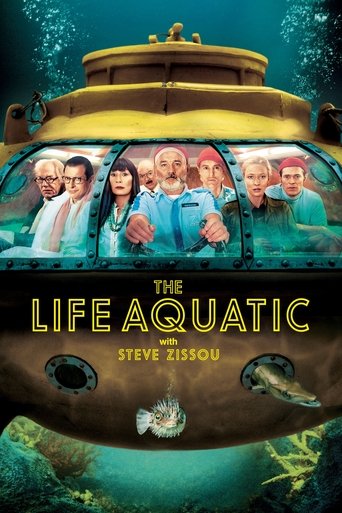
His films have always made it apparent, that Wes Anderson is a stickler for the details. When he began work on The Life Aquatic with Steve Zissou, Anderson had a clear vision for what sort of boat The Belafonte was.
In the press kit for the film, production designer Mark Friedberg says, “The search for the boat itself was quite a ride.” He went on to describe what Anderson was looking for in the boat, “that it needed to be of World War II vintage, that it needed to be a minesweeper, that it had to be about 50 meters and, to some degree, that it would be reminiscent of Cousteau’s Calypso.”
Eventually, the production found a 50-year-old minesweeper in South Africa and brought it to Rome. They reoutfitted the vessel to appear like an oceanographic research ship and gave it a fresh coat of brightly colored paint. But this only covered what was necessary for exterior shots.
The interior was, of course, of equal or even greater importance to the success of the narrative. Anderson cared deeply for how the ship could convey more information about the titular character. Anderson knew from the start that audiences needed to see the Belafonte from a cross-sectional, diorama-style perspective. This scene, the introduction of The Belafonte, is perhaps one of the most memorable of Anderson’s filmography.
“When it came to the interior of the boat, we wanted it to reflect Zissou,” Friedberg recalls, “a man unsure of where he is going in life right now, so everything in this world is sort of jerryrigged, pieced together,”
How do you cut an aluminum boat in half and keep everything intact? You don’t. Anderson wanted the flexibility to crane a camera across the entire boat and allow the audience to see the inner workings of the ship. So, the crew essentially rebuilt everything they saw inside the real boat on a soundstage: a 150-foot-long, three-story set sliced down the middle.
Anderson had to plan the shoot with incredible precision. His words: “We had all the actors kind of walking around in this ant colony and the lights are changing and the cameras moving, and it was really exciting because none of us had ever done anything like this before. The set itself was more like a museum piece than a movie set—people kept coming by to see it.”
To the layman, it appears Wes Anderson fell in love with this approach. In several films following The Life Aquatic with Steve Zissou, he would go on to use variants of the cross-sectional, miniature construction. The impossibly long train in The Darjeeling Limited. The coastal dollhouse in Moonrise Kingdom. The hotel miniature in The Grand Budapest Hotel.
There’s simply something about practical set design that is more charming than the digital alternative, and Anderson’s work, even if it’s often a little pretentious, is such wonderful proof of that.
 Drew Blake
Click the link to get one good movie recommendation from us every Tuesday, delivered straight to your inbox.